
Grade 5 - Humans and the Ocean
SUMMARY
A 4-5 Week Science Unit for Intermediate Level
This unit is designed for fifth grade, but could be adapted to other grades. Students develop an understanding of the connections between humans and the ocean through case studies, analysis of changing technology, and activities that illustrate impacts of one part of a system on its other components. They plan and carry out a monitoring activity, create community awareness, and take action to protect the ocean.
Essential Questions
-
How do people interact with the ocean?
-
What can we do to take care of the ocean?
Enduring Understandings
- Connections between humans and the ocean are important.
- Everyone is responsible for caring for the ocean.
- Science is a way to help us study the many connections in our world.
Ocean Literacy Principles Addressed
- The Earth has one big ocean with many features.
- The ocean supports a great diversity of life and ecosystems.
- The ocean and humans are inextricably interconnected.
LESSON PLANS
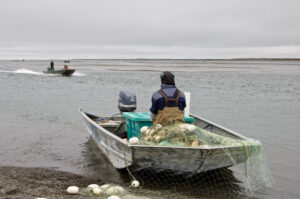
Fishing for the Future
In this activity, students discuss how methods of fishing have changed, then play a game to explore the idea of sustainable fishing practice. They simulate fishery activity using increasingly sophisticated technology, in different ocean areas. As students progress through the fishing seasons, they will likely overfish their part of the ocean and will have to migrate to other places in the ocean to meet their basic needs.
View Lesson Plan
Location: Classroom, Large Space, Outside
Activity Type: Game, Hands-On
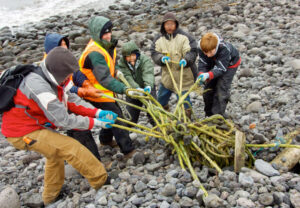
Ocean Impacts
In this investigation, students will work in small groups to research a current issue related to human interaction with the ocean, using Internet and library resources. They will communicate the facts about their issue on a poster, participate in a poster viewing session, and ask questions about the information presented on the other posters created by members of their class.
View Lesson Plan
Location:
Activity Type: Project
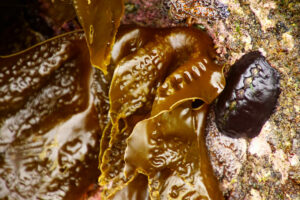
The Legend of the Bidarki
Students develop an understanding of interconnections among the ocean, humans, and other living things through a case study of harvesting bidarki (katy chitons) in the Alaska Native villages of Port Graham and Nanwalek. They reflect on their own connections to the ocean.
View Lesson PlanAUTHORS
Brandon Beard, Teacher, Kotlik
Glenn Oliver, Teacher, Anchorage
Sheryl Sotelo, Teacher, Homer
Marilyn Sigman, Scientist, Center for Alaska Coastal Studies, Homer
Stephanie Hoag, Curriculum Consultant, Juneau
Marla Brownlee, Alaska Sea Grant